
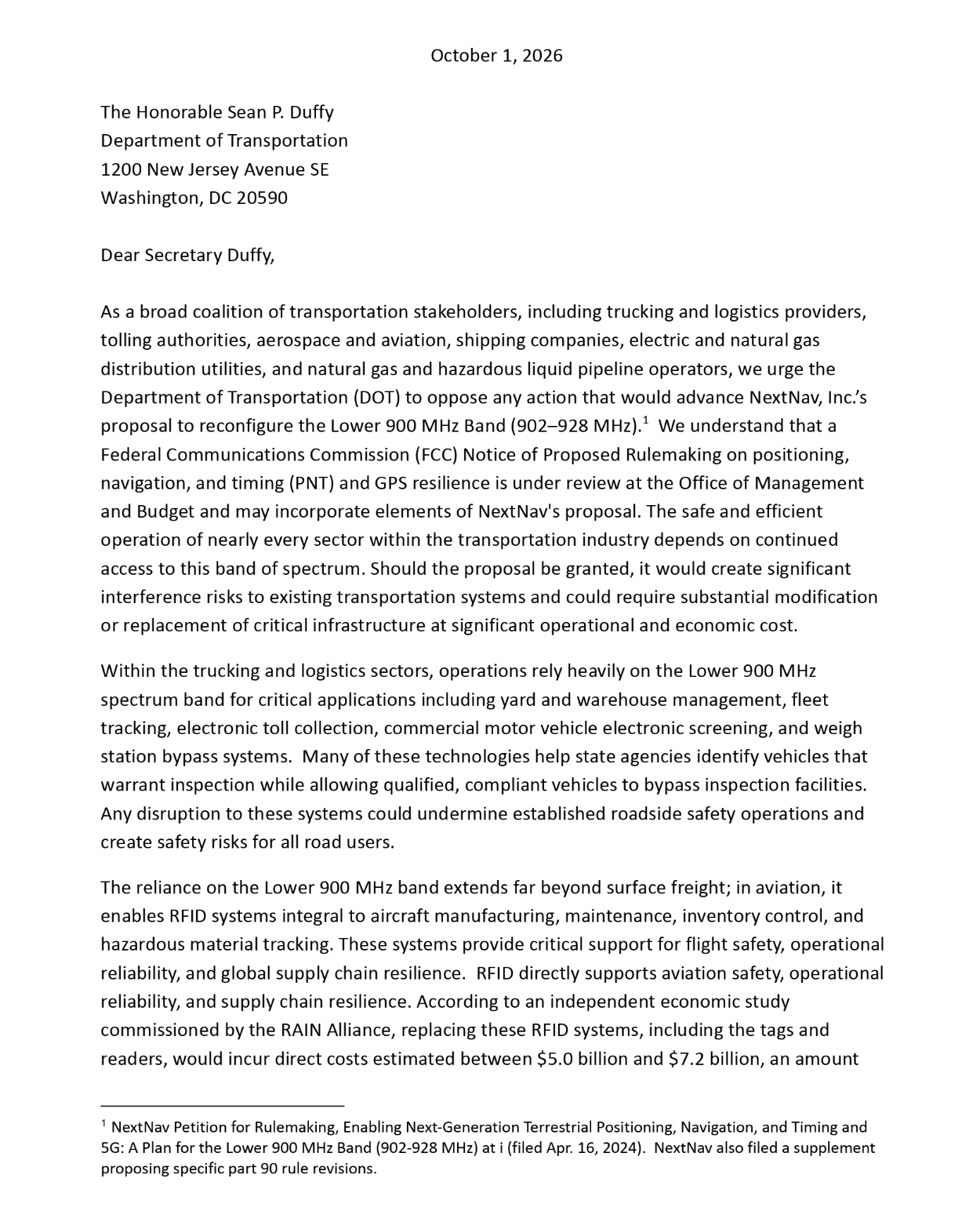
Letter to Department of Transportation Secretary Duffy
On October 1, the Alliance sent a letter to Department of Transportation Secretary Duffy urging DOT to oppose any action advancing NextNav’s proposal to reconfigure the Lower 900 MHz Band (902–928 MHz), citing potential interference risks to critical transportation systems, as well as significant operational and economic costs.
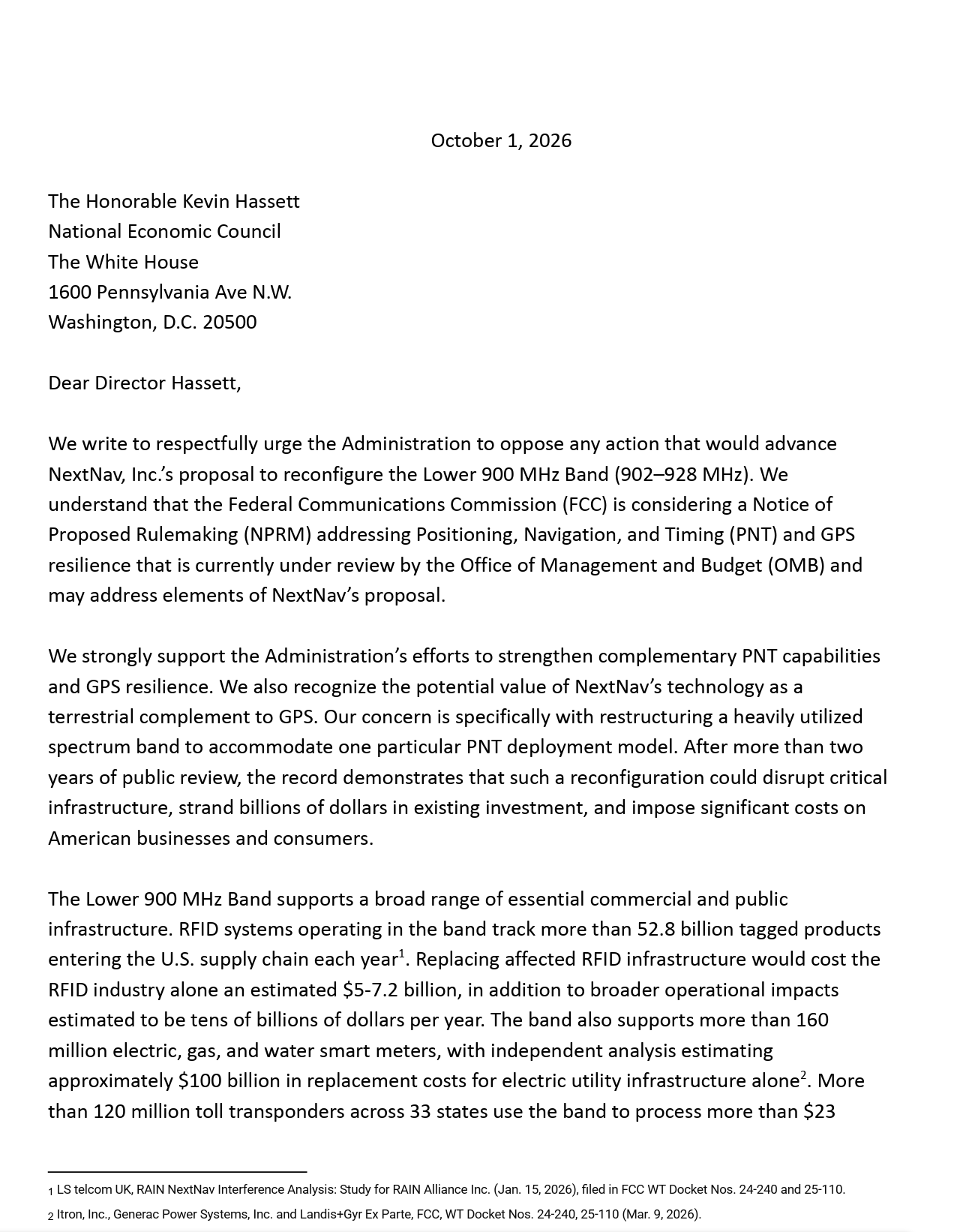
Letter to National Economic Council Director Hassett
On October 1, the Alliance sent a letter to NEC Director Hassett urging the Administration to oppose NextNav’s proposal to reconfigure the Lower 900 MHz Band (902–928 MHz), which may be addressed in an upcoming FCC NPRM on PNT and GPS resilience.
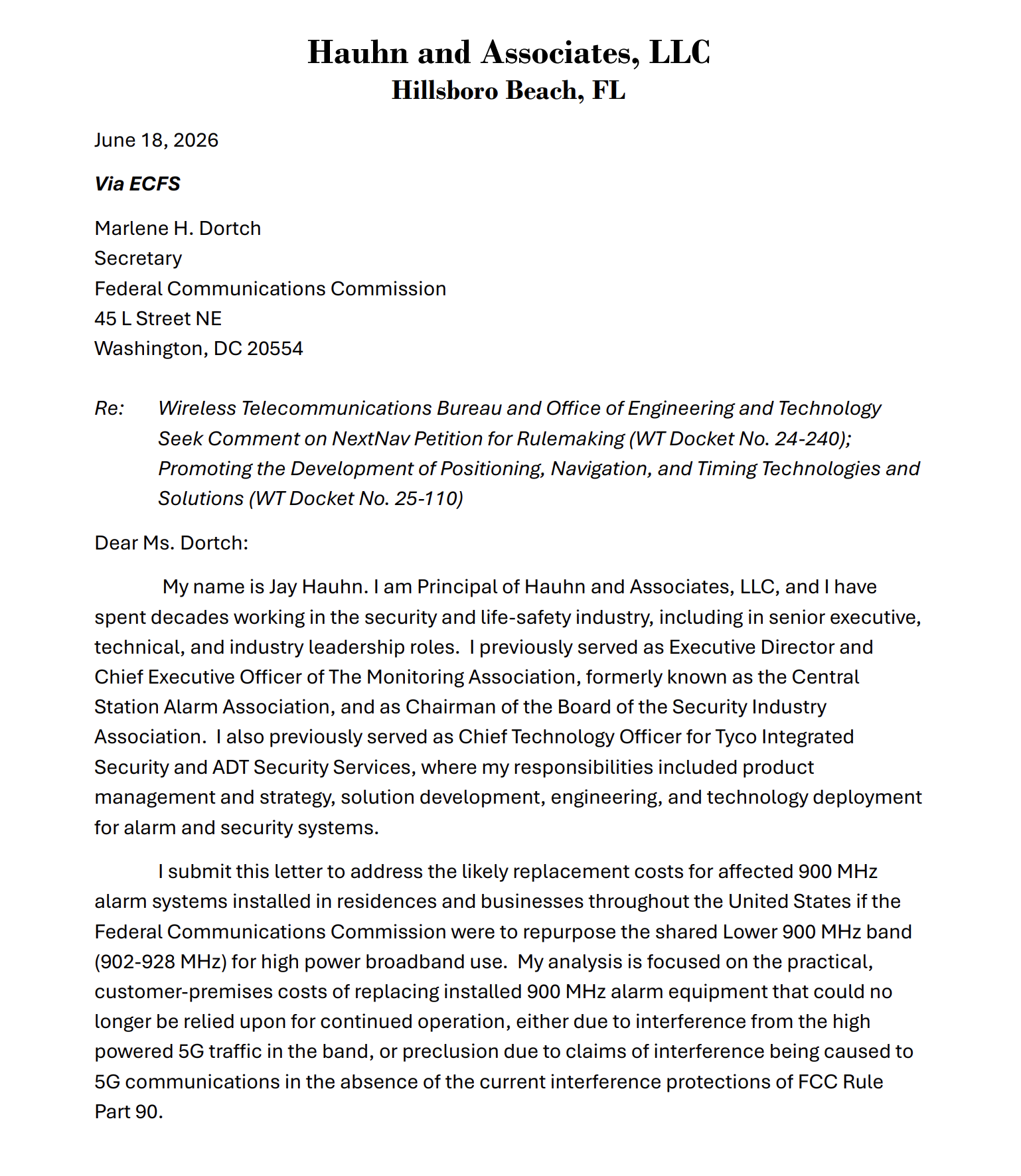
Security Industry Economic Analysis of the Replacement Costs of NextNav Proposal
Letter to FCC to address the likely replacement costs for affected 900 MHz alarm systems installed in residences and businesses throughout the United States if the Federal Communications Commission were to repurpose the shared Lower 900 MHz band (902-928 MHz) for high power broadband use. The analysis is focused on the practical, customer-premises costs of replacing installed 900 MHz alarm equipment that could no longer be relied upon for continued operation, either due to interference from the high powered 5G traffic in the band, or preclusion due to claims of interference being caused to 5G communications in the absence of the current interference protections of FCC Rule Part 90.
Furchtgott-Roth Economic Analysis of NextNav's Proposal
This analysis considers the economic implications of the NextNav proposal and (1) estimates the costs associated with the proposal; (2) observes that NextNav’s current PNT offering, which it touts as a backup for GPS, and other alternative PNT solutions outside of the Lower 900 MHz band reduces the potential economic benefits of the proposal; and (3) assigns a lower value to the proposed creation of a new 15-megahertz channel. This analysis concludes that NextNav’s proposed re-banding provides no net economic benefit to the American people. Instead, this study concludes that the costs to the nation far outweigh any possible benefits.
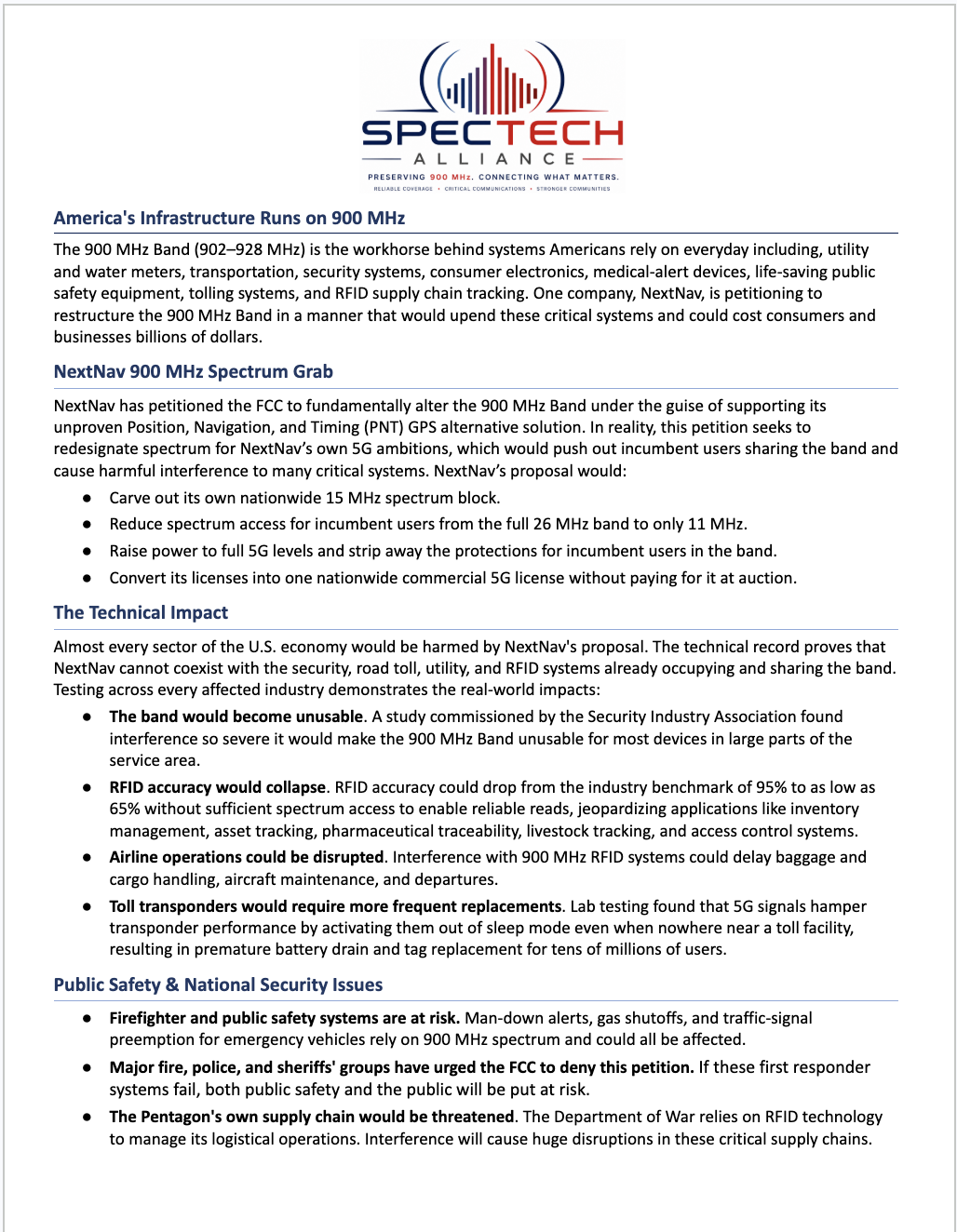
One Pager: America's Infrastructure Runs on 900 MHz
The 900 MHz Band (902–928 MHz) is the workhorse behind systems Americans rely on everyday including, utility and water meters, transportation, security systems, consumer electronics, medical-alert devices, life-saving public safety equipment, tolling systems, and RFID supply chain tracking. One company, NextNav, is petitioning to restructure the 900 MHz Band in a manner that would upend these critical systems and could cost consumers and businesses billions of dollars.
Find our one pager here.
RAIN Alliance Interference Analysis
This report analyzes mutual interference between authorized Part 15 RAIN RFID devices and NextNav’s proposed 5G devices in the Lower 900 MHz Band (902-928 MHz), evaluating conditions under which significant interference may arise in either direction. The report ultimately concludes that, under real-world deployment conditions, there are severe interference scenarios associated with NextNav's proposal.
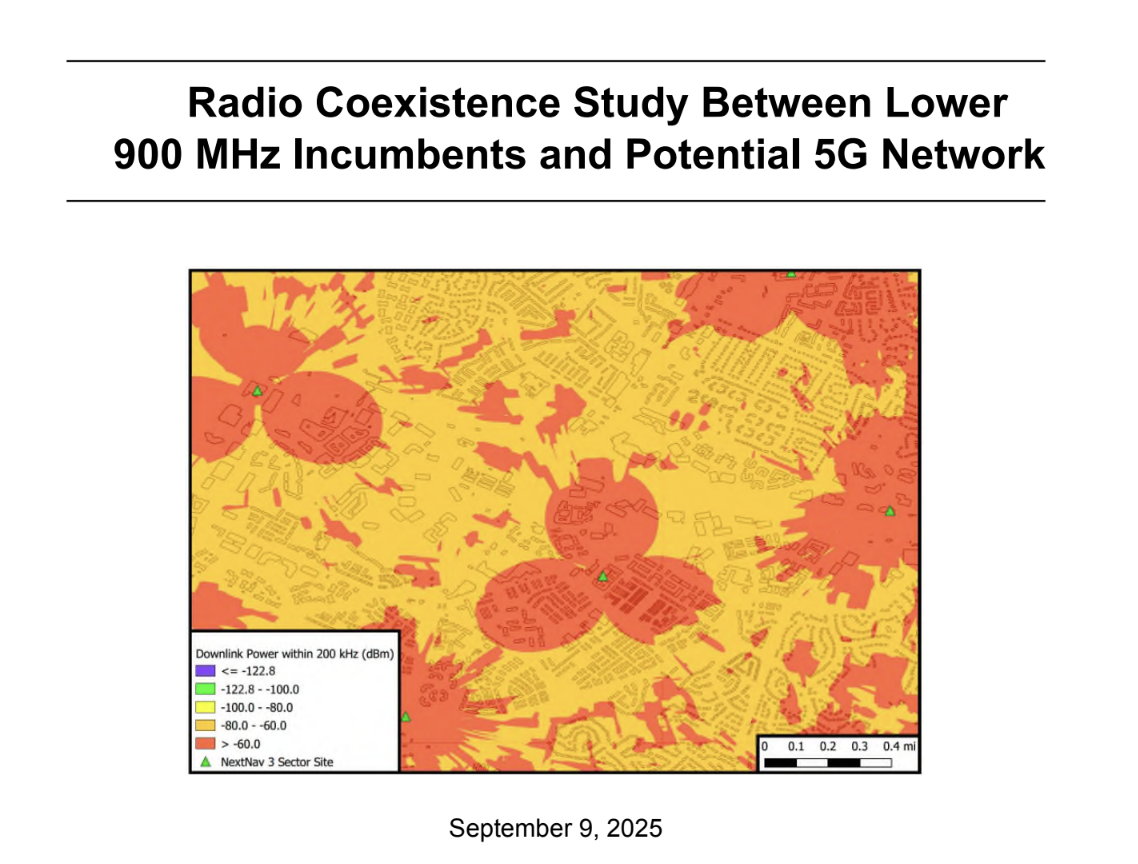
Security Industry Association Pericle Study
This report provides an independent assessment, conducted by Pericle Communications Company for the Security Industry Association, of the feasibility of coexistence between incumbent unlicensed Part 15 radios operating within the 902-928 MHz Band and the proposed 5G cellular network described in a Petition for Rulemaking submitted by NextNav Inc.

Letter to Federal Communications Commission Chairman Carr
On June 3, 2026, the Alliance sent a letter to FCC Chairman Carr expressing strong support for the FCC’s efforts to establish a resilient backup to GPS through complementary Position, Navigation, and Timing (PNT) capabilities, while raising concerns about any effort to reconfigure the 902–928 MHz spectrum band as part of that process.
Find our full letter here.